


How to Help Someone With Bipolar Disorder Who Is in Crisis: A Guide for Family and Friends
When someone you care about is in a bipolar crisis, your goal is safety first, de-escalation second, and connection to professional care third. You don’t have to diagnose what’s happening in the moment—focus on what you’re seeing and what keeps everyone safe.
If This Is an Immediate Emergency
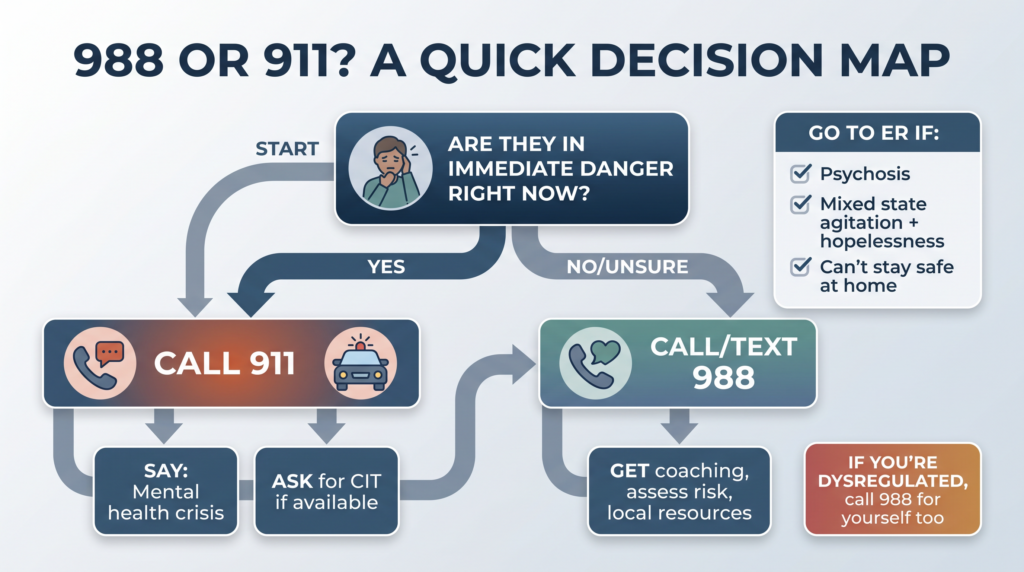
- If the person is in immediate danger of harming themselves or others: call 911.
- When calling 911, say: “I need help with a mental health crisis.”
Ask if a Crisis Intervention Team (CIT) officer is available (CIT officers are trained to respond in ways less likely to escalate a psychiatric crisis). - If you’re not sure whether it’s an emergency: call or text 988 (Suicide & Crisis Lifeline).
Crisis counselors can help you assess risk and decide what to do next. - If you’re with someone who may be suicidal and you’re unsure what to do: stay with them and call 988.
What You’re Dealing With: Recognizing a Bipolar Crisis
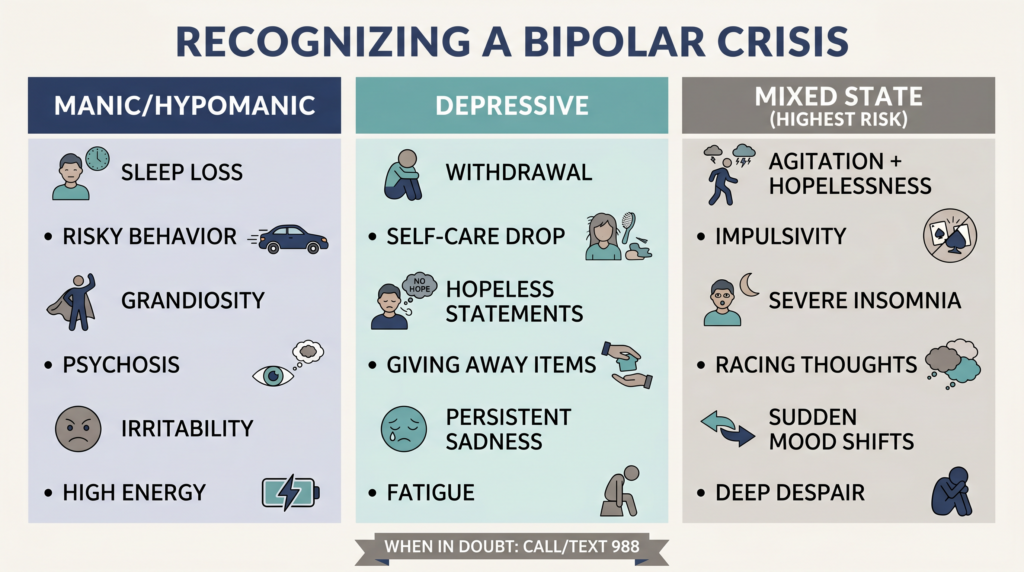
A bipolar crisis can look very different depending on whether the person is in mania/hypomania, depression, or a mixed state.
A Manic or Hypomanic Crisis
Common signs include:
- Dramatically reduced sleep (sleeping 3–4 hours or less and feeling “fine,” or not sleeping)
- Rapidly escalating energy, speech, activity
- Grandiose beliefs (special powers, certainty of a unique mission)
- Impulsive, risky behavior (spending, risky driving, unprotected sex, confrontations)
- Psychosis (hearing/seeing things others don’t, fixed false beliefs, losing touch with reality)
- Severe irritability or agitation (explosive anger, hard to calm)
A Depressive Crisis
Common signs include:
- Complete withdrawal from people and activities
- Can’t get out of bed or manage basic self-care (food, hygiene)
- Hopelessness (“nothing will get better,” “I’m a burden”)
- Talking about death or suicide (directly or indirectly)
- Giving away possessions
- A sudden, unusual calm after intense distress (can mean they’ve decided to act)
A Mixed-State Crisis (Often the Most Dangerous)
- Hopelessness + agitation/energy at the same time
- Very high suicide risk (they feel hopeless and have the energy/impulsivity to act)
- This combination requires immediate clinical attention—don’t wait to see if it passes.
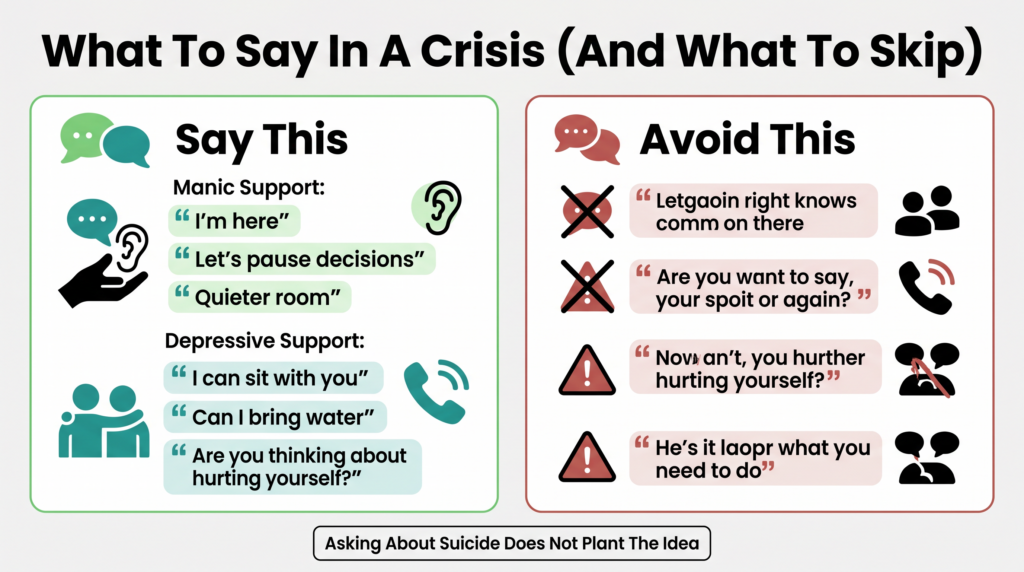
What to Say — and What to Avoid
During a Manic Crisis
What Helps
- Calm, simple language: “I’m here. I’m not going anywhere.”
- Postpone decisions: “Let’s talk about that plan tomorrow. Right now I want to make sure you’re okay.”
- Reduce stimulation: turn down TV/music, move to a quieter room, lower your voice
- Direct but not confrontational: “I’m worried about you. I’d like you to talk to your doctor today.”
- Practical offers: “Can I make you some tea while we talk?”
What Makes Things Worse
- Arguing head-on with grandiose beliefs (often escalates)
- Matching their irritability with your own
- Ultimatums during the acute phase
- Trying to reason through complex decisions (capacity is often impaired)
- Leaving abruptly without explaining where you’re going and when you’ll return
A consistent theme in reputable guidance is to plan ahead, learn warning signs, and take care of yourself, since supporting someone can be intense (Mind: “Be open… learn warning signs… make a plan… look after yourself.”)
Source: https://www.mind.org.uk/information-support/types-of-mental-health-problems/bipolar-disorder/supporting-someone-with-bipolar/
During a Depressive Crisis
What Helps
- Presence without pressure: “I’m just going to sit with you. You don’t have to talk.”
- Specific, small offers: “Can I bring you water?” (instead of “Let me know if you need anything.”)
- Ask directly about suicide if concerned: “Are you thinking about hurting yourself?”
- Validation: “This sounds really painful.”
- Maintain connection (even simple texts can matter)
What Makes Things Worse
- “Just push through it” (implies it’s a choice)
- “You have so much to be grateful for” (often feels invalidating)
- Telling them what they “should” feel
- Disappearing because it’s uncomfortable
- Expecting them to perform wellness for you
If You’re Worried About Suicide: Ask
- Asking directly about suicide does not increase risk—it opens the door to honesty and help.
- Try: “I’m worried about you. Are you thinking about hurting yourself or ending your life?”
- If they say yes:
Stay with them. Don’t leave them alone. Call 988 together or go to the ER. - If they say no:
“I’m glad. I’m still worried, and I’m going to stay with you for a while.” - Don’t promise secrecy about suicidal thoughts. If safety is at risk, you must involve help.
When to Call 988 vs. 911
Call 988 When
- You’re unsure if it’s an emergency and want guidance
- They have suicidal thoughts but no immediate danger
- You want help thinking through what you’re observing
- You feel overwhelmed and need support deciding next steps
Call 911 When
- There is immediate danger and the person won’t/can’t go to the ER voluntarily
- There’s active violence, a weapon, or an overdose/serious self-harm has occurred
- When you call, say “mental health crisis” and request CIT if available
Helping Someone Get to the Emergency Room
If They Are Willing to Go
- Offer to drive them or arrange transportation
- Offer to stay with them through the ER process
- Help gather: medication list, insurance card, ID
- Explain what to expect (reduces fear)
If They Are Refusing to Go
- Stay calm; keep expressing concern without escalating
- Call 988 for situation-specific coaching
- If there’s imminent danger and they refuse: call 911
- If dangerous but not immediately life-threatening: contact their prescriber and describe what you’re seeing
Involving the Treatment Team
Contacting Their Prescriber
- If you’re genuinely concerned about safety, you can contact their clinician and share observations—even if confidentiality limits what they can tell you.
- Script: “I’m [Name]’s [relationship]. I’m calling because I’m concerned about their safety and want to share what I’m observing.”
- If you are listed as an authorized contact, communication may be more direct.
Activate a Crisis Plan (If One Exists)
- Many people create a plan while stable—follow it.
- If you have a role in that plan, now is the time to use it.
DBSA specifically emphasizes having a plan before crisis hits—include emergency contacts, current medications, and instructions.
Source: https://www.dbsalliance.org/support/for-friends-family/
Taking Care of Yourself During a Crisis
Your Wellbeing Matters Too
- Supporting someone in mania, depression, or suicidality is traumatic and dysregulating.
- If you can, pause: slow your breathing, step back briefly, and consider calling 988 yourself for coaching.
- Afterward, debrief with someone safe: a therapist, trusted friend, or a peer support group.
What You Cannot Control
- You can’t force treatment
- You can’t prevent every episode through vigilance
- You can’t cure bipolar disorder through love or effort
Your job is to respond, support, and connect to professional care, not replace it.
Resources for Supporters of People in Crisis
- 988 Suicide & Crisis Lifeline — call/text 988 (also for family/supporters)
- DBSA (Depression and Bipolar Support Alliance): Friends & Family
https://www.dbsalliance.org/support/for-friends-family/ - Mind (UK): Supporting Someone With Bipolar Disorder
https://www.mind.org.uk/information-support/types-of-mental-health-problems/bipolar-disorder/supporting-someone-with-bipolar/ - NAMI Family Support Group (peer-led)
https://www.nami.org/support-groups/nami-family-support-group/
If you tell me what you’re seeing (sleep changes, agitation, suicidal statements, risky behavior, psychosis, access to weapons/means), I can help you decide whether it fits “call 988 now” vs “call 911 now” and what to say in the moment.