

Navigating Bipolar Plus: A Guide to Comorbid Conditions
Quick Answer
When you’re diagnosed with both bipolar disorder and ADHD, you’re facing two conditions that feed off each other—mood swings amplify attention problems, and scattered focus destabilizes mood.
The most effective bipolar and adhd management combines mood stabilizers with carefully timed ADHD medications, structured daily routines, and therapy that addresses both conditions simultaneously.
Recent 2026 research shows that adding ADHD medications to stabilized bipolar treatment reduces psychiatric hospitalizations and improves daily functioning when done right.
Last updated: May 7, 2026
Key Takeaways
Integrated treatment works best: Combining mood stabilizers, ADHD medications, lifestyle structure, and therapy yields better outcomes than treating either condition alone
Timing matters: Stabilize your mood first before adding stimulants—this prevents triggering manic episodes
New medications offer hope: 2026 brings non-stimulant options like viloxazine that treat ADHD while improving sleep and anxiety, critical for bipolar stability
Lifestyle isn’t optional: Regular sleep schedules, exercise, and structured routines directly impact both attention and mood regulation
Early intervention changes outcomes: Starting comprehensive treatment soon after diagnosis significantly reduces relapse rates and improves long-term functioning
Family involvement helps: Including support systems in treatment planning improves medication adherence and social functioning
Predictive tools exist: Machine learning models can now identify which ADHD patients are at highest risk for developing bipolar disorder, enabling earlier monitoring
What Makes Bipolar and ADHD Management So Complex?
You’re managing two conditions that share symptoms but require opposite approaches. ADHD pulls you toward impulsivity and scattered attention.
Bipolar disorder swings you between depressive lows and manic highs. Both conditions affect the same brain systems—dopamine, executive function, impulse control—but in different ways.
The complexity shows up in your daily life. You might struggle to tell if your racing thoughts come from ADHD or hypomania. Your inability to focus could be ADHD, bipolar depression, or medication side effects.
Traditional ADHD stimulants can trigger manic episodes if your mood isn’t stable first. And when you’re depressed, ADHD medications alone won’t help you get out of bed.
The stakes are higher with both conditions. Research shows you face greater symptom burden, more functional impairment at work and home, and higher hospitalization rates compared to people with just one diagnosis.
You’re also more likely to have additional challenges—substance use, anxiety disorders, or relationship problems. But here’s what matters: integrated treatment that addresses both conditions simultaneously produces the best outcomes.
You’re not choosing between managing mood or attention. You’re building a comprehensive approach that stabilizes both.
Why Traditional Treatment Falls Short
Most psychiatrists trained to treat these conditions separately. You might get a mood stabilizer for bipolar and be told stimulants are too risky. Or you get ADHD treatment that ignores mood cycling. Neither approach works well.
The breakthrough in 2026 comes from understanding these conditions as interconnected. Your treatment team needs to coordinate medication timing, monitor for interactions, and adjust based on which symptoms dominate at any moment. This requires more than separate appointments with different specialists.
For more context on managing multiple conditions, see our guide on bipolar comorbidities.
How Do You Approach Medication for Bipolar and ADHD Management?
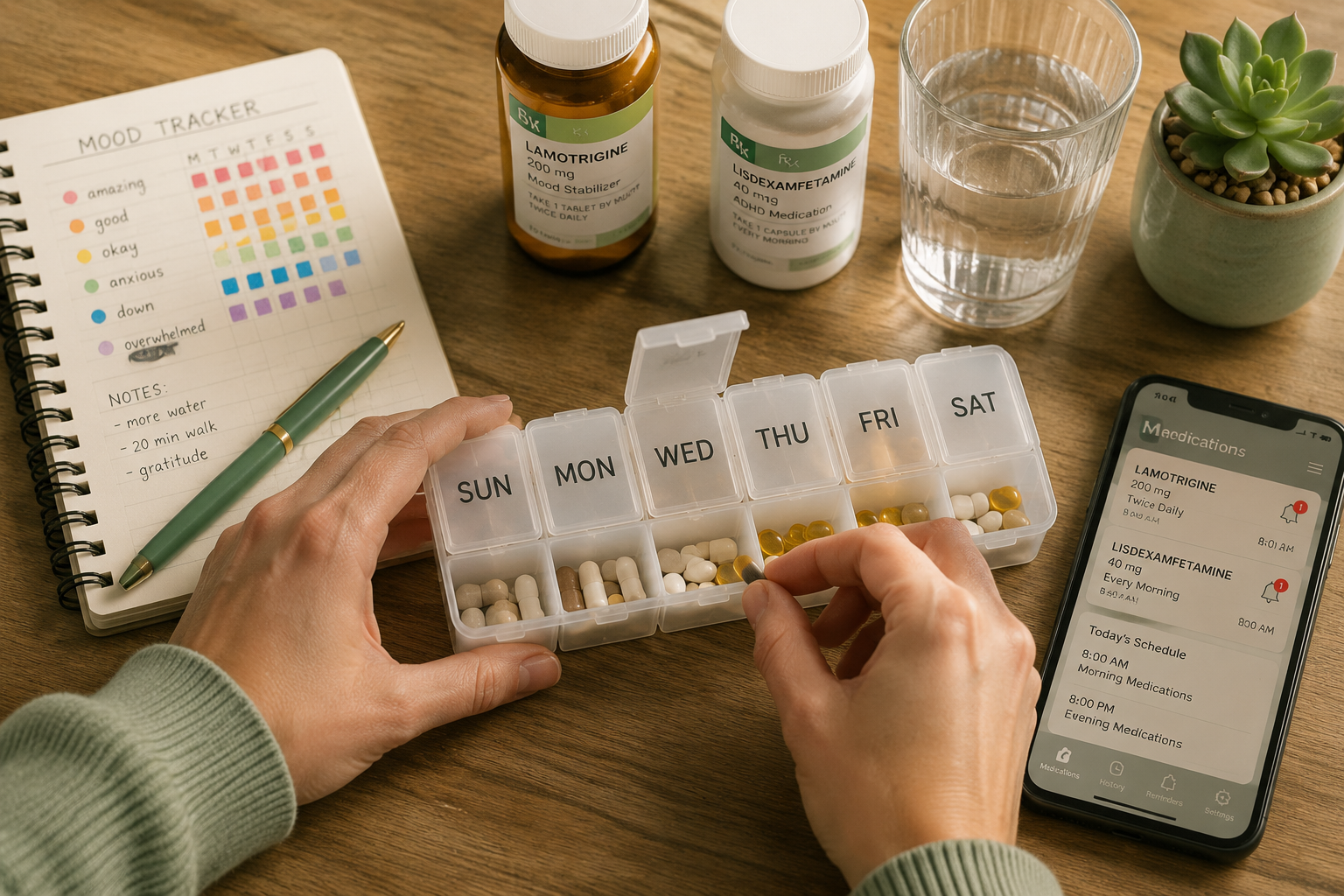
Start with mood stabilization, then carefully add ADHD treatment. This sequence prevents the most dangerous complication—stimulants triggering mania in unstabilized bipolar disorder.
Your medication foundation typically includes:
Mood stabilizers first: Lithium, valproate, or lamotrigine to establish baseline mood control
ADHD medications second: Added only after 2-3 months of mood stability
Careful monitoring: Weekly check-ins during the first month of any new ADHD medication
The Stimulant Question
Stimulants work for ADHD but carry risks with bipolar disorder. Recent 2026 research published in April shows that when used correctly—after mood stabilization—stimulants like lisdexamfetamine and methylphenidate actually reduce psychiatric hospitalizations in people with both conditions [1].
Choose stimulants if:
Your mood has been stable for at least 3 months
You have no recent manic episodes
You can commit to weekly monitoring initially
Non-stimulant options haven’t worked
Avoid stimulants if:
You’re currently manic or hypomanic
You have a history of stimulant-induced mania
You struggle with medication adherence
You have active substance use issues
Non-Stimulant Alternatives
Viloxazine (Qelbree) emerged in 2026 as a game-changer for bipolar-ADHD management. This non-stimulant treats ADHD while simultaneously improving anxiety, depression, and sleep—all critical for mood stability [2][3].
Other non-stimulant options:
Atomoxetine: Lower mania risk, takes 4-6 weeks to work fully
Bupropion: Treats both ADHD and bipolar depression, but monitor for activation
Centanafadine (investigational): Triple reuptake inhibitor showing sustained efficacy in 2026 trials with minimal side effects [2]
Timing Your Medications
Chronopharmacotherapy—timing medications to your natural rhythms—matters more than most people realize. Taking stimulants too late triggers insomnia, which destabilizes mood. Taking mood stabilizers at the wrong time increases side effects.
Practical timing strategies:
Stimulants: Take immediately upon waking, never after 2 PM
Mood stabilizers: Evening doses reduce daytime sedation
Sleep medications: 30-60 minutes before consistent bedtime
Track your response in a mood/medication journal
Common mistake: Starting both medications simultaneously. You won’t know which one causes side effects or which one helps. Change one variable at a time, waiting 2-4 weeks between adjustments.
Learn more about medication options in our bipolar disorder medications guide.

What Lifestyle Changes Actually Impact Bipolar and ADHD Management?
Lifestyle modifications aren’t optional add-ons—they’re core treatment components that directly affect brain chemistry, mood regulation, and attention. The 2026 clinical consensus emphasizes combining medication with “social scaffolding”—external support systems and structured routines [3].
Sleep: Your Non-Negotiable Foundation
Sleep disruption triggers both manic episodes and ADHD symptoms. One night of poor sleep can destabilize weeks of progress. You need consistent sleep-wake times, even on weekends, even when you feel good.
Sleep hygiene that works:
Same bedtime and wake time daily (±30 minutes maximum)
No screens 60 minutes before bed
Bedroom temperature 65-68°F
Blackout curtains or eye mask
White noise if you’re sensitive to sounds
No caffeine after noon
If you’re hypomanic, you won’t feel tired. Go to bed anyway. Use prescribed sleep medication if needed. The goal isn’t feeling sleepy—it’s maintaining the routine that prevents full mania.
Exercise: Natural Mood and Focus Regulation
Regular physical activity improves mood stability, cognitive performance, and reduces symptom severity in both conditions. Exercise increases dopamine and norepinephrine—the same neurotransmitters ADHD medications target—while stabilizing mood through endorphin release and stress reduction.
Exercise strategies for dual diagnosis:
Morning cardio: 20-30 minutes of elevated heart rate improves focus for 4-6 hours
Afternoon strength training: Reduces restlessness and improves sleep quality
Avoid evening intensity: High-intensity workouts after 6 PM can trigger insomnia
Consistency over intensity: Daily moderate exercise beats sporadic intense workouts
Choose activities you actually enjoy. You’re building a lifelong habit, not training for competition. Walking, swimming, cycling, dancing—whatever keeps you moving regularly.
Nutrition: Stabilizing Energy and Mood
Balanced nutrition supports emotional stability and cognitive function. Blood sugar crashes worsen both ADHD focus problems and bipolar mood swings. Processed foods and excessive caffeine create artificial energy cycles that destabilize your baseline.
Nutritional guidelines:
Protein with every meal (stabilizes blood sugar and provides amino acids for neurotransmitter production)
Complex carbohydrates (sustained energy without crashes)
Omega-3 fatty acids (fish, walnuts, flaxseed—supports brain function)
Limit caffeine to morning only (maximum 200mg daily)
Avoid alcohol (interferes with medications and destabilizes mood)
Common mistake: Skipping meals when hypomanic or depressed. Set phone alarms for meal times. Prep simple meals in advance. Nutrition affects medication effectiveness—don’t undermine your treatment.
Structure: External Systems for Executive Function
Time-blocking reduces decision fatigue and executive load—critical when managing both impulse control and mood regulation [3]. You’re not relying on willpower or motivation. You’re building external systems that work regardless of your current state.
Practical structure tools:
Calendar-block every activity (including breaks, meals, self-care)
Visual schedules posted in high-traffic areas
Medication reminders with multiple backups
Automatic bill payments and subscription management
Designated spaces for keys, wallet, phone
Weekly planning sessions (same day, same time)
The goal isn’t rigid perfection. It’s reducing the number of decisions you make daily, freeing mental energy for what matters.
For more on lifestyle modifications, visit our lifestyle changes resource.

Why Does Therapy Matter for Bipolar and ADHD Management?
Medication stabilizes your brain chemistry. Therapy teaches you how to live with these conditions. Cognitive-behavioral therapy (CBT) reduces both mood and attention symptoms, improves coping skills, and enhances daily functioning. Family-focused therapy increases support and understanding, leading to better adherence and fewer relapses.
Cognitive-Behavioral Therapy Adaptations
Standard CBT needs modification for dual diagnosis. You’re addressing thought patterns that trigger mood episodes while simultaneously building executive function skills for ADHD.
CBT components for bipolar-ADHD:
Mood monitoring: Daily tracking to identify early warning signs of episodes
Cognitive restructuring: Challenging thoughts that trigger depression or hypomania
Behavioral activation: Structured activity scheduling to combat depression and provide ADHD structure
Problem-solving skills: Breaking down overwhelming tasks into manageable steps
Relapse prevention: Identifying triggers and creating action plans
The “agreements framework” emerging in 2026 research reframes ADHD management from “fixing symptoms” to “improving agreement-keeping”—addressing executive dysfunction that leads to broken commitments with yourself and others [3]. This reduces self-blame and enables functional solutions.
Family-Focused Interventions
Your support system needs education about both conditions. Family members who understand that your missed commitments stem from executive dysfunction (not character flaws) and that your mood changes follow biological patterns (not personal choices) provide better support.
Family therapy benefits:
Improved communication during mood episodes
Reduced expressed emotion (criticism and hostility that trigger relapses)
Better crisis planning and early intervention
Shared understanding of medication importance
Practical support for daily structure
Involve family in treatment planning when possible. They see patterns you might miss. They can help implement structure and provide accountability without judgment.
Support Groups and Peer Networks
Connecting with others managing both conditions reduces isolation and provides practical strategies. Support groups offer emotional validation and real-world advice that complements professional treatment.
Finding effective support:
Look for groups specifically addressing comorbid conditions
Online communities provide access when local options are limited
Peer support complements (doesn’t replace) professional treatment
Share what works, learn from others’ experiences
Explore our mental health resources for support options.
What Does Integrated Care Look Like in Practice?
Integrated care means your treatment team communicates, coordinates, and adjusts based on your whole picture—not just isolated symptoms. This multidisciplinary approach produces the greatest improvements in symptom reduction, daily functioning, and quality of life.
Your Treatment Team
Core members typically include:
Psychiatrist: Manages medications, monitors for interactions and side effects
Therapist: Provides CBT, family therapy, or other evidence-based interventions
Primary care physician: Monitors physical health, manages other medical conditions
Care coordinator: Facilitates communication between providers, tracks appointments
Optional specialists:
Neuropsychologist for cognitive testing and rehabilitation
Occupational therapist for daily living skills
Substance abuse counselor if needed
Peer support specialist with lived experience
Communication and Coordination
Clear information flow between providers prevents dangerous gaps. Your psychiatrist needs to know if your therapist observes early mood changes. Your therapist needs to know about medication adjustments that might affect your energy or focus.
Practical coordination strategies:
Sign releases allowing providers to communicate
Request shared electronic health records when possible
Keep a personal health summary (current medications, recent changes, upcoming appointments)
Bring written updates to appointments (saves time, ensures nothing forgotten)
Ask providers to copy you on communication
Individualized Treatment Plans
Your plan should specify what to do when symptoms worsen, who to contact in crisis, and how to adjust treatment based on life changes. It’s a living document, updated regularly.
Essential plan components:
Current medications with dosages and timing
Early warning signs of mood episodes
Crisis contacts and emergency procedures
Lifestyle commitments (sleep schedule, exercise routine)
Therapy frequency and goals
Next medication review date
Common mistake: Assuming your treatment team automatically coordinates. They’re busy. You might need to facilitate communication, especially if seeing providers in different systems.
Learn more about working with your treatment team in our working with your doctor guide.
How Do You Know If Your Bipolar and ADHD Management Is Working?
Track specific, measurable outcomes—not just how you feel. Feelings fluctuate. Data reveals patterns.
Functional Measures That Matter
Occupational functioning:
Attendance and punctuality at work or school
Task completion rates
Quality of work output
Ability to meet deadlines
Relationships with colleagues or classmates
Social functioning:
Frequency of social contact
Quality of relationships
Conflict resolution success
Ability to maintain commitments
Participation in activities you value
Cognitive performance:
Ability to focus on tasks for target duration
Memory for important information
Decision-making quality
Problem-solving effectiveness
Mental clarity and processing speed
Emotional well-being:
Mood stability (fewer extreme highs and lows)
Anxiety levels
Sleep quality
Energy levels throughout day
Overall life satisfaction
When to Adjust Treatment
Treatment needs adjustment when functional measures decline or side effects outweigh benefits. Don’t wait for crisis.
Signs you need changes:
Persistent side effects affecting quality of life
Symptoms returning despite medication adherence
New life stressors requiring additional support
Medication effectiveness declining over time
Better options becoming available
Red flags requiring immediate attention:
Suicidal thoughts or plans
Manic symptoms escalating
Severe medication side effects
Substance use increasing
Inability to function in daily roles
Long-Term Prognosis
Early intervention and sustained adherence to comprehensive management predict favorable outcomes. Delays in diagnosis and treatment lead to higher relapse rates and greater functional impairment.
Factors improving long-term outcomes:
Starting integrated treatment within 6 months of diagnosis
Consistent medication adherence (>80% of doses)
Regular therapy participation
Strong support systems
Stable housing and employment
Absence of substance use
Early intervention for emerging symptoms
You’re not aiming for perfection. You’re building resilience—the ability to recognize changes early and adjust before crisis hits.
For more on what to expect after diagnosis, see diagnosed with bipolar – what’s next.
What New Developments Are Changing Bipolar and ADHD Management in 2026?
The landscape shifted significantly in early 2026. New medications, predictive tools, and treatment frameworks offer more options and better outcomes.
Medication Advances
Viloxazine (Qelbree) demonstrated effectiveness treating ADHD alongside comorbid anxiety and depression while improving sleep—addressing multiple challenges simultaneously [2][3]. Real-world data from the 2026 APSARD conference showed sustained benefits without the mood destabilization risk of stimulants.
Centanafadine, a triple reuptake inhibitor targeting dopamine, norepinephrine, and serotonin, showed continued efficacy through one year in phase 3 trials with low dropout rates and minimal new adverse events [2]. This investigational medication may offer another non-stimulant option soon.
Refined atypical antipsychotics in 2026 selectively target dopamine receptors, balance serotonin with fewer metabolic effects, and reduce sedation and cognitive dulling [5]. These improvements matter for bipolar-ADHD patients who need dopamine support for attention without mood destabilization.
Long-acting injectables provide steady medication levels, reduced relapse risk, and improved consistency—particularly beneficial for patients with adherence challenges [5].
Predictive Risk Models
Machine learning analysis of nationwide data built a predictive model identifying which ADHD patients face highest risk for developing bipolar disorder within five years [4]. Prescription of anticonvulsant mood stabilizers, second-generation antipsychotics, and SSRIs after ADHD diagnosis were major predictors.
This enables earlier monitoring and intervention. If your medication profile includes these agents, your providers should implement targeted bipolar screening and safety planning.
Chronopharmacotherapy
Timing medication to align with individual sleep-wake cycles maximizes daytime focus and minimizes nighttime insomnia [3]. This precision strategy particularly benefits bipolar patients where medication timing impacts mood stability.
Work with your psychiatrist to optimize timing based on your natural rhythms, not standard dosing schedules.
Frequently Asked Questions
Can you safely take stimulants if you have bipolar disorder?
Yes, but only after achieving mood stability for at least 2-3 months. Stimulants added to stabilized bipolar treatment reduce psychiatric hospitalizations when carefully monitored [1].
Start with low doses, increase gradually, and maintain weekly check-ins initially. Non-stimulant options like viloxazine or atomoxetine carry lower mania risk.
How long does it take to find the right medication combination?
Expect 6-12 months of adjustments. You’ll stabilize mood first (2-3 months), then add ADHD treatment (another 2-3 months), then fine-tune based on response. Some people find their combination faster; others need longer. Patience and consistent communication with your psychiatrist matter more than speed.
What if ADHD medications make my mood worse?
Stop the medication and contact your psychiatrist immediately. This signals your mood isn’t stable enough for that particular ADHD treatment. You’ll need to strengthen mood stabilization before trying again, possibly with a different ADHD medication or lower dose. Never push through worsening mood symptoms.
Do lifestyle changes really make a difference or is medication enough?
Lifestyle modifications directly impact treatment effectiveness. Regular sleep schedules prevent mood episodes. Exercise increases the same neurotransmitters ADHD medications target.
Structured routines reduce executive function demands. Research consistently shows integrated approaches (medication + lifestyle + therapy) produce better outcomes than medication alone.
How do you tell if symptoms are from ADHD, bipolar, or medication side effects?
Track symptoms daily with specific details: when they occur, intensity, duration, and context. Share this data with your treatment team. Generally, ADHD symptoms stay relatively constant, bipolar symptoms cycle over days to weeks, and medication side effects appear shortly after dose changes. But overlap is common—professional assessment beats self-diagnosis.
Should family members be involved in treatment?
Yes, when possible. Family-focused interventions improve adherence, reduce relapse rates, and enhance social functioning. Family members provide outside perspective on symptom changes you might miss. They can support daily structure and offer accountability. Include them in treatment planning and education sessions.
What happens if you can’t afford integrated treatment?
Start with what’s accessible. Community mental health centers offer sliding-scale fees. Some psychiatrists provide both medication management and brief therapy. Online therapy platforms cost less than traditional in-person sessions. Peer support groups are often free. Build your treatment team gradually as resources allow. Partial treatment beats no treatment.
How often should you see your treatment team?
Initially, expect weekly psychiatrist visits for the first month after any medication change, then monthly for 3-6 months, then quarterly once stable. Therapy typically starts weekly, transitioning to biweekly or monthly as you build skills. Increase frequency during stressful periods or if symptoms worsen. Your team should specify follow-up schedules.
Can you ever stop treatment once symptoms improve?
Both conditions are chronic and require ongoing management. Some people reduce medication doses or therapy frequency once stable, but complete discontinuation typically leads to relapse. Think of treatment like managing diabetes—you’re controlling symptoms, not curing the condition. Discuss any changes with your treatment team; never stop medications abruptly.
What should you do if you’re not improving after several months?
Request a comprehensive treatment review. Discuss whether diagnosis is accurate, if medications are optimally dosed, if therapy approach fits your needs, and if lifestyle factors are addressed. Consider second opinions from specialists in comorbid conditions. Sometimes treatment resistance signals additional undiagnosed conditions or inadequate integration of care.
How do you manage both conditions during pregnancy?
This requires specialized care from a perinatal psychiatrist. Some medications are safer during pregnancy than others. Untreated bipolar disorder and ADHD also carry risks for mother and baby.
Your treatment team will weigh risks and benefits, possibly adjusting medications and increasing therapy and support. Planning ahead before pregnancy allows safer transitions. See our bipolar and pregnancy resources for more information.
What role does substance use play in bipolar and ADHD management?
Substance use—including alcohol, marijuana, and misuse of prescription medications—destabilizes mood, worsens ADHD symptoms, and interferes with treatment effectiveness. If you’re struggling with substances, address this as part of integrated treatment.
Many people with both conditions use substances to self-medicate; proper treatment reduces this need. See our guide on managing bipolar disorder and substance abuse.
Conclusion
Managing both bipolar disorder and ADHD demands more than treating two separate conditions. You’re addressing interconnected brain systems that influence each other constantly. The most effective approach integrates mood stabilization, carefully timed ADHD treatment, structured lifestyle modifications, and therapy that addresses both conditions simultaneously.
Start with mood stability—this foundation prevents dangerous complications when adding ADHD medications. Build daily structure through consistent sleep schedules, regular exercise, and external systems that reduce decision fatigue. Engage your support system in treatment planning and education. Track functional outcomes, not just symptoms, to measure real progress.
The 2026 treatment landscape offers more options than ever: non-stimulant ADHD medications that improve sleep and anxiety, predictive tools identifying high-risk patients earlier, refined medications with fewer side effects, and frameworks that reduce self-blame while building practical solutions.
Your next steps:
Schedule a comprehensive evaluation if you haven’t already—accurate diagnosis precedes effective treatment
Build your treatment team with providers who understand comorbid conditions and communicate with each other
Implement one lifestyle change this week—start with sleep schedule consistency or daily exercise
Begin tracking mood, attention, and functional measures in a simple journal or app
Involve your support system—share educational resources and invite them to appointments when appropriate
Commit to the process—finding your optimal treatment combination takes time, but integrated approaches consistently produce the best outcomes
You’re not managing these conditions alone. Effective treatment exists. Early intervention and sustained engagement with comprehensive care significantly improve your daily functioning, relationships, and long-term prognosis. The work is worth it.
For ongoing support and resources, explore our bipolar disorder support page and connect with others navigating similar challenges.
References
[1] Adhd In The News 2026 04 30 – https://chadd.org/weekly-editions/adhd-in-the-news-2026-04-30/
[2] New Adhd Medications Discussed At Apsard 2026 – https://www.psychiatrictimes.com/view/new-adhd-medications-discussed-at-apsard-2026
[3] Adhd In Adulthood New Research And Strategies For 2026 – https://www.favormentalhealthservices.com/post/adhd-in-adulthood-new-research-and-strategies-for-2026
[4] Pmc12776958 – https://pmc.ncbi.nlm.nih.gov/articles/PMC12776958/
[5] New Bipolar Medications 2026 Clinical Relief Go 5732e3 – https://ubiehealth.com/doctors-note/new-bipolar-medications-2026-clinical-relief-go-5732e3